
Home / Noise-reducing windows
Noise Reducing Windows Albuquerque NM | Soundproof Glass
Freeways, flight paths, trains and wind all find the weakest spot in a wall: the window. Here is how acoustic glass and tight installs quiet Albuquerque homes.
Call (505) 337-4642Talk to a local window pro
Where Albuquerque noise comes from
Albuquerque is a big city spread across a wide valley, and the noise it makes is not evenly spread. A few sources affect thousands of homes:
- Aircraft. The Albuquerque International Sunport shares its runways with Kirtland Air Force Base, and commercial, cargo, private and military aircraft all use the field. The Sunport runs a noise abatement program with voluntary procedures and noise monitoring, and the city’s zoning maps include airport noise contour areas around the airport. Aviation noise is directional, concentrated along the approach and departure paths.
- Interstates. I-25 runs north to south and I-40 runs east to west, crossing at the Big I interchange. Homes near either corridor, and near busy arterials like Paseo del Norte, Coors, Montgomery, Wyoming and Tramway, live with steady traffic sound.
- Rail. Freight trains and the Rail Runner commuter line run through the valley, with horns at crossings.
- Wind. Spring gusts are a noise of their own. A whistling window is usually a leaking one.
Whatever the source, the window is almost always the weakest point in a wall for sound. Stucco and framing block far more noise than glass, so upgrading windows is the most effective way to quiet a room.

Noise-reducing windows in Albuquerque: how they work
Mass
Heavier glass blocks more sound. Single-pane windows are the least effective. Dual-pane is better, and thicker glass better still.
Different thicknesses
Each pane of glass resonates at certain frequencies and lets those through more easily. Using two panes of different thickness, for example one thicker than the other, means the two panes do not resonate together, so more sound is blocked across the range.
Laminated glass
Laminated glass sandwiches a thin plastic interlayer between two sheets of glass. The interlayer damps vibration, much like a hand on a ringing bell. Laminated glass on one side of a dual-pane unit is the most effective common upgrade for traffic and aircraft noise, and it also blocks almost all UV and holds together if struck.
Air space
A wider gap between panes generally improves sound performance. Replacement windows have practical limits, but some product lines offer wider spacing for acoustic models.
Seals and installation
Sound travels anywhere air does. A window with excellent glass but a poor seal, or an installation with gaps around the frame, will still leak noise. Tight interlocks, compression seals and a fully insulated, sealed installation are as important as the glass.
Reading STC and OITC ratings
Manufacturers publish two acoustic ratings. STC, Sound Transmission Class, is the familiar number and reflects how well a window blocks mid- and high-frequency sound such as voices and barking dogs. OITC, Outdoor-Indoor Transmission Class, gives more weight to low frequencies, the rumble of trucks, trains and jet engines. For homes near I-25, I-40 or the Sunport approach paths, OITC is the more useful number. Ask for both when comparing quotes. A typical single-pane window performs poorly on both; acoustic dual-pane units with laminated glass score much higher.
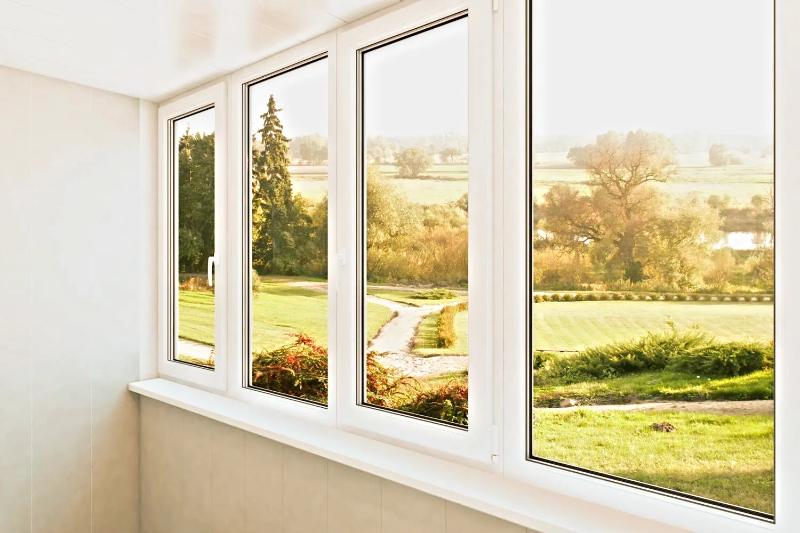
Choosing a window style for quiet
- Picture windows have no moving parts and no operable seals, so they are the quietest for their size.
- Casements compress against seals on all four sides when locked, and are among the quietest operable windows.
- Single-hung units have a fixed top sash, so they have fewer leak paths than double-hungs.
- Sliders can be quiet with a good interlocking meeting rail, but cheap sliders are often the noisiest windows in a house.
Where to start in your home
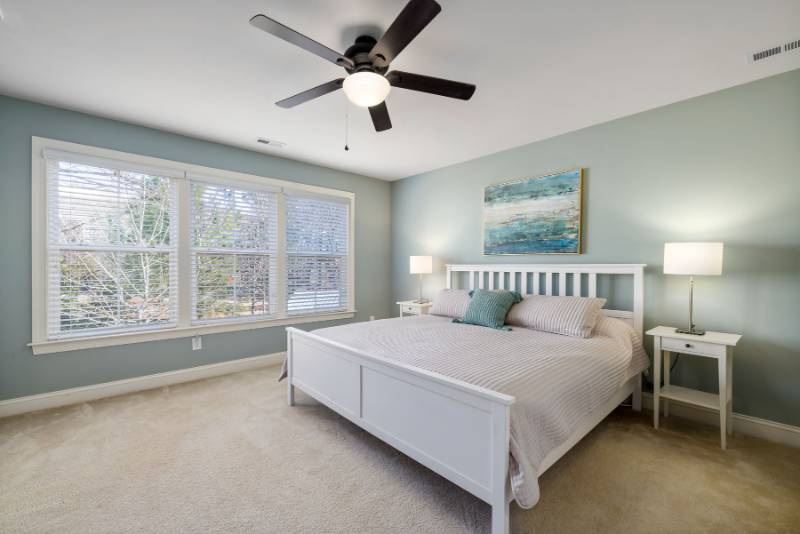
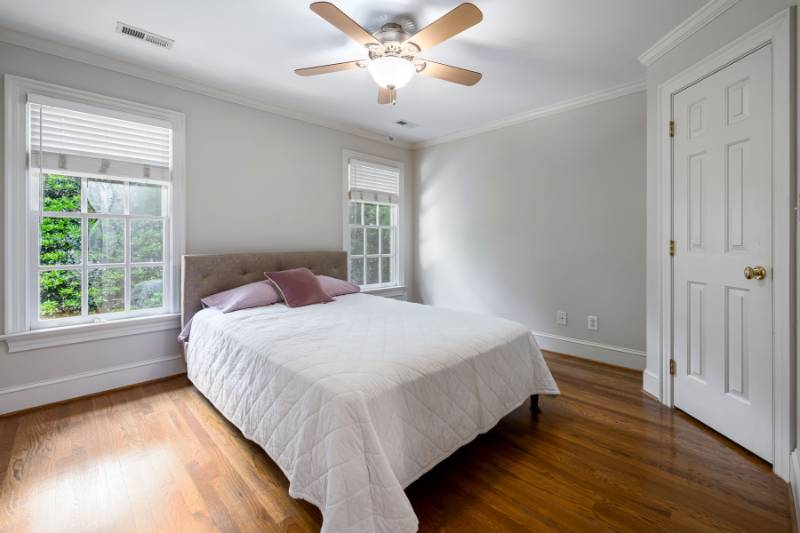
You do not have to upgrade every window to acoustic glass. Start with the rooms where noise bothers you most, usually bedrooms facing the street, the freeway or the flight path. Upgrade those windows to laminated glass and keep standard low-E dual-pane elsewhere. This targeted approach gives most of the benefit for a fraction of the cost.
Noise and energy together
Acoustic upgrades and energy performance go hand in hand. Albuquerque is in IECC climate zone 4B, and a laminated dual-pane unit with low-E and argon still meets energy goals while cutting noise. Laminated glass also blocks nearly all ultraviolet light, which matters at our altitude for protecting floors and furniture. On west-facing bedrooms that face a busy road, one window can solve three problems at once: heat, fading and noise.
Installation details that matter for sound
- Fill the gap between the window and the opening with low-expansion foam rather than leaving voids.
- Seal the interior trim and exterior perimeter fully.
- On full-frame replacements, flash and seal the opening before the stucco is patched.
- Adjust operable sashes so they close evenly against their seals.
What noise-reducing windows cost
Published Albuquerque cost guides put most standard installed windows priced from roughly $365 to $960. Acoustic upgrades such as laminated glass or dual thickness add to that per window. Because you can target only the noisiest rooms, the total upgrade cost is often modest. each quote lists items separately, letting you see the acoustic option for each window separately.
Reporting aircraft noise
If aircraft noise is a recurring problem, the Sunport offers a flight tracking and noise complaint system and a noise hotline at (505) 842-2007. Reporting does not replace better windows, but it helps the airport track where noise is felt.
Other sound paths to check
Windows are usually the biggest sound leak, but not the only one. If you replace the windows and a room is still loud, look at these next:
- Exterior doors, especially sliding patio doors with worn weather-stripping and thin glass.
- Evaporative cooler ducts and vents, common in older Albuquerque homes, which can carry outside sound straight into a room.
- Attic and roof, where thin insulation lets aircraft noise through the ceiling.
- Gaps around pipes and wires that pass through exterior walls.
How much quieter will it be?
It depends on what you have now and what you choose. The jump from single-pane aluminum to standard dual-pane vinyl is large on its own, because both the glass and the seals improve. Adding laminated glass in the rooms that face the noise usually makes the next biggest difference. Results vary with the source: voices and barking dogs drop off more easily than the deep rumble of trucks and jets, which is why the OITC rating matters for homes near the freeways and the airport.
The most reliable way to judge is to ask the installer for the STC and OITC ratings of both your current window type and the proposed one, and to listen to a sample unit in a showroom if one is available.
Neighborhoods where we hear about noise most
Homeowners in the Southeast Heights and areas south and east of the Sunport, households along the I-25 and I-40 corridors, and homes backing onto major arterials in the Northeast Heights and on the Westside ask about quieter windows most often. In Rio Rancho and on the West Mesa, the most common complaint is wind whistling through old sliders, which tight new windows fix.
Quieter rooms, better sleep
For most families, the real payoff is sleep. A bedroom window facing a busy road or flight path can wake light sleepers at dawn. Laminated glass in just that one opening often changes how the whole household feels in the morning.
Noise and window questions from Albuquerque homeowners
Do new windows really reduce noise?
Usually, and most of all when the old windows are single-pane or old aluminum windows. Dual-pane glass, tight seals and a well-insulated installation cut outside noise noticeably. Laminated glass and panes of different thickness reduce it further.
What is the best glass for noise?
Laminated glass, which has a plastic interlayer between two sheets, is the most effective common upgrade. Using two panes of different thickness in a dual-pane unit also helps, because each pane blocks different frequencies.
What do STC and OITC ratings mean?
STC (Sound Transmission Class) rates how well a window blocks mid- and high-frequency sound like voices. OITC (Outdoor-Indoor Transmission Class) better reflects low-frequency noise such as traffic and aircraft. Higher numbers block more.
Which window style is quietest?
Fixed picture windows and casements usually perform best because they seal tightly on all sides. Sliders and hung windows can still be quiet if they have good interlocks and weather-stripping.
Where can I report aircraft noise in Albuquerque?
The Albuquerque International Sunport runs a flight tracking and noise complaint system and a noise hotline at (505) 842-2007.
Tired of hearing the freeway or the flight path? Tell us which street or flight path bothers you, and we will call to talk through acoustic glass and arrange a visit. Or simply call (505) 337-4642.
Price noise-reducing windows in Albuquerque
Prefer to talk? Call (505) 337-4642.
Related pages
Quiet the street side of the house
Tell us which road or flight path you hear and we will suggest the glass for it.
Get my free estimate (505) 337-4642